
Goal 1
Youth are Entitled to Remain in Their Same School If in Their Best Interest

Youth in out-of-home care live, on average, in two to three different places each year. When youth move, they often are forced to change schools. Studies indicate that frequent school changes negatively affect students’ educational growth and graduation rates. Youth in care are entitled to educational stability, and efforts must be made to keep them in their same school whenever possible. School may be the one place the youth has had (and can continue to have) consistency and continuity.
Benchmarks
A. Youth’s foster care placement decisions take school stability into account, and school stability is a priority whenever possible and in the child’s best interests.
E. Youth have necessary support and information to make school of origin decisions; youth, birth parents, caseworkers, foster parents, courts, attorneys, schools, and educators are trained about legal entitlements and appeal and dispute procedures.
B. Youth have sufficient foster home and permanent living options available in their home communities to reduce the need for school moves.
F. Youth with disabilities continue in an appropriate education setting, regardless of changes in foster care placements, and transportation is provided in accordance with the youth’s Individualized Education Program (IEP).
C. When in their best interests, youth have a legal right to remain in the same school (school of origin) even when they move outside the school district, and schools that retain children are not financially penalized.
D. Youth are entitled to necessary transportation to their school of origin, with responsibilities clearly designated for transportation costs.


What the Data Tells Us
-
95% of youth in foster care experience at least one unplanned school change per year. (Ryan, Hurley & Randall, 2025.)
31%-75% of youth in foster care change schools when first entering care. (Clemens, Kopfenstein, Tis & LaLonde, 2017; Frerer, Sosenko, Pellegrin, Manchik & Horowitz, 2013.)
25%-34.2% of 17-18-year-olds experience 5 or more school changes. (Massachusetts Court Improvement Program, 2019; Clemens, LaLonde & Sheesley, 2016; see also Courtney, Terao, Bost, 2004.)
-
Nearly 50% of youth in foster care are chronically absent. (Ryan, Hurley & Randall, 2025.)

Federal Law and Policy
-
The Every Student Succeeds Act of 2015 (ESSA), which reauthorized the Elementary and Secondary Education Act of 1965 (ESEA) and amended Title I, Part A, contains provisions specifically for students in foster care to ensure their educational stability and success, including the following requirements:
Youth remain in their school of origin, unless it is not in the child’s best interest, with transportation provided. A best interest determination (B.I.D.) process must be completed for youth entering foster care and when there is a change in placement.
Every state educational agency (SEA) must designate a point of contact (POC) to facilitate collaboration with child welfare agencies (CWAs) and local educational agencies (LEAs).
LEAs must designate a POC if the corresponding CWA notifies the LEA in writing that it has designated a CWA POC.
LEAs must collaborate with CWAs to develop and implement written procedures for how transportation to schools of origin will be provided, arranged, and funded to ensure students promptly receive transportation.
For more information on ESSA and school stability, see here (p. 6) and here.
-
The Fostering Connections to Success and Increasing Adoptions Act of 2008 (Fostering Connections), which amended parts B and E of Title IV of the Social Security Act, contains educational stability and school enrollment provisions for students in foster care, including in the following requirements:
A youth’s case plan must include an education stability plan with assurances that—
each placement takes into account the appropriateness of the current educational setting and the proximity to the school of origin
the child welfare agency (CWA) has coordinated with the appropriate local educational agency (LEA) to ensure school stability
the youth remains in the school of origin unless it is not in the child’s best interest
the youth receives immediate and appropriate enrollment if changing schools, with all educational records of the child given to the school
For more information on Fostering Connections and school stability, see here (pp. 1-3), and here.
-
Additional care and consideration must be taken when making school stability decisions for youth in foster care who are students with disabilities.
Individuals with Disabilities Education Act (IDEA) requires schools to provide all children and youth with disabilities (ages 3-21) a free appropriate public education (FAPE) in the least-restrictive environment (LRE). Special instruction, supports, and other related services, such as transportation, may be required to help ensure a student’s access to school and included in their Individualized Education Program (IEP) or Individualized Family Service Plan (IFSP). For more information, see here (pp. 7-8) and here.
Section 504 of the Rehabilitation Act of 1973 (Section 504), a civil rights law, helps children and youth with disabilities access FAPE by prohibiting discrimination on the basis of disability in programs or activities that receive federal financial assistance, including public schools. Needed aids, services, modifications, and accommodations can be included in a student’s Section 504 plan. For more information, see here and here.
Title II of the Americans with Disabilities Act of 1990 (Title II) also helps children and youth with disabilities access FAPE by prohibiting discrimination on the basis of disability in state and local government services, programs and activities regardless of whether they receive any federal financial assistance, including public schools. For more information, see Joint Guidance (p. 42, n. 37-38).
-
The U.S. Departments of Education and Health and Human Services released Non-Regulatory Joint Guidance: Ensuring Educational Stability and Success for Students in Foster Care (Joint Guidance) in November 2024. This updated Joint Guidance provides critical new information about how federal laws support students in foster care, including ESSA, Fostering Connections, and disability rights law. The guidance covers a range of topics, including school stability (A-H), academic success (I-K), special populations (L-Q), funding (R-V) and data collection (W-Z).
State Law and Policy

Strategy: Codify Best Interest Determination (B.I.D.) Best Practices
Arizona SB 1205 (2023): It provides requirements and timelines regarding education stability provisions, including: individuals to consult and factors to consider when making a best interest determination (B.I.D.) within five days of the child entering foster care or changing placements; the child welfare agency ensures transportation for the student during the B.I.D. process; if it is determined that the school of origin is not in the best of the child, the new school must be included in the determination process; immediate enrollment and records transfer within two days; the child welfare and local education agencies jointly share transportation responsibilities after the B.I.D.; arbitration process to resolve any disputes within 10 business days; and the child welfare agency collects and reports data related to the B.I.D. process.

Strategy: Ensure Child Welfare and Education Local Points of Contact
Washington SB 5184 (2021): In addition to state and local education agency points of contact for students in foster care, this law requires each K-12 public school to have a building-level point of contact. (Moreover, in Washington, there are also state, regional, and county-based child welfare agency education points of contact. See Foster Care Liaisons/DCYF Contacts.)
Strategy: Ensure Transportation is Arranged, Provided, and Funded
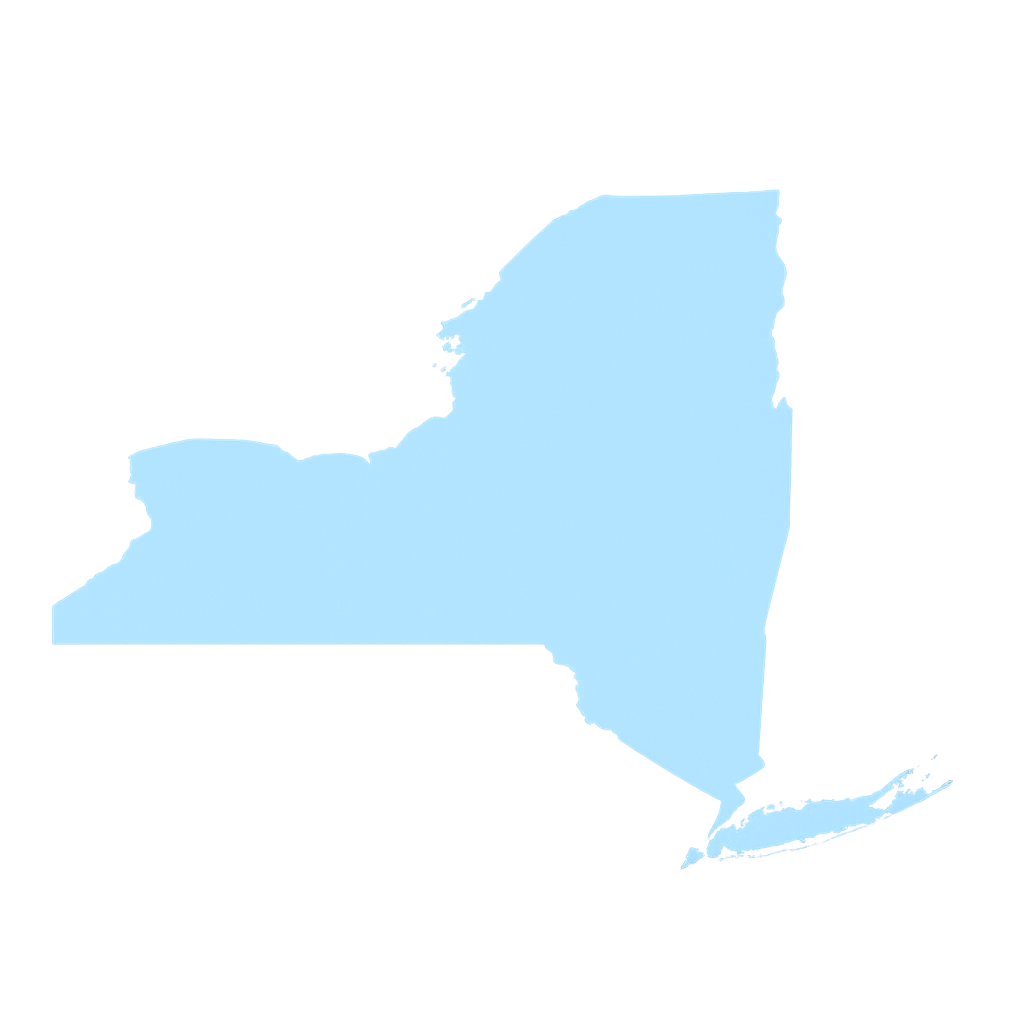
New York §3244(4) (2018): Requires the designated school district of attendance to provide transportation to and from the child's foster care placement location and the school of origin. State aid is available for transportation costs up to 50 miles. Excess allowable transportation costs resulting from the attendance of a child or youth in foster care shall be shared equally between the Local Department of Social Services and the designated school district of attendance, unless they have written agreements relating to how excess transportation costs should be funded. Excess transportation costs are defined as the difference between what a district would spend to transport a student to their assigned school and their school of origin.

Strategy: Collaboration and Capacity Building
New Mexico HM 75 (2019): Convenes a task force to study the educational stability of students in foster care and to review and make recommendations to the state child welfare agency, state education agency, schools, and legislature regarding the creation of statutes, policies and procedures to create standardization and consistency for educational stability for students in foster care.

Strategy: Develop Clear Dispute Resolution Procedures
Nevada NRS 388E.125 (2017): If there is a dispute between the child welfare and local education agency related to transportation that is not resolved within 5 business days, the juvenile or family court with jurisdiction over the child must resolve the dispute by court order within 5 business days. The child welfare and local education agencies must provide the child with transportation to the school of origin until the dispute is resolved.
Strategy: Ensure Child Welfare and Education Local Points of Contact
Nevada NRS 388E.135 (2017): In addition to requiring foster care points of contact at the state and local education agencies, this law requires each child welfare agency to designate a point of contact responsible for ESSA implementation. Thus, in Nevada, there are state and county-based child welfare agency education points of contact. See, e.g., NV Foster Care POCs (2022).

Strategy: Secure Additional State Funding
Colorado HB 1306 (2018): Established the Educational Stability Grant Program through which education providers apply for grants from the State Board of Education to provide educational services, including “innovative practices to address barriers for students in out-of-home placement.” As part of the program’s implementation, this bill requires the State Board of Education to create rules that, among other things, establish a standard B.I.D. process and require local child welfare and education agencies to establish system-level plans for how transportation to a student’s school of origin will be provided, arranged, and funded. This law also requires the State Board of Education to track the success of the grants by measuring improvement in attendance, behavioral/discipline incidents, grade-level promotion, dropout rate, and graduation rates.
For more information on state legislation to support students in foster care, see our School Stability Brief.